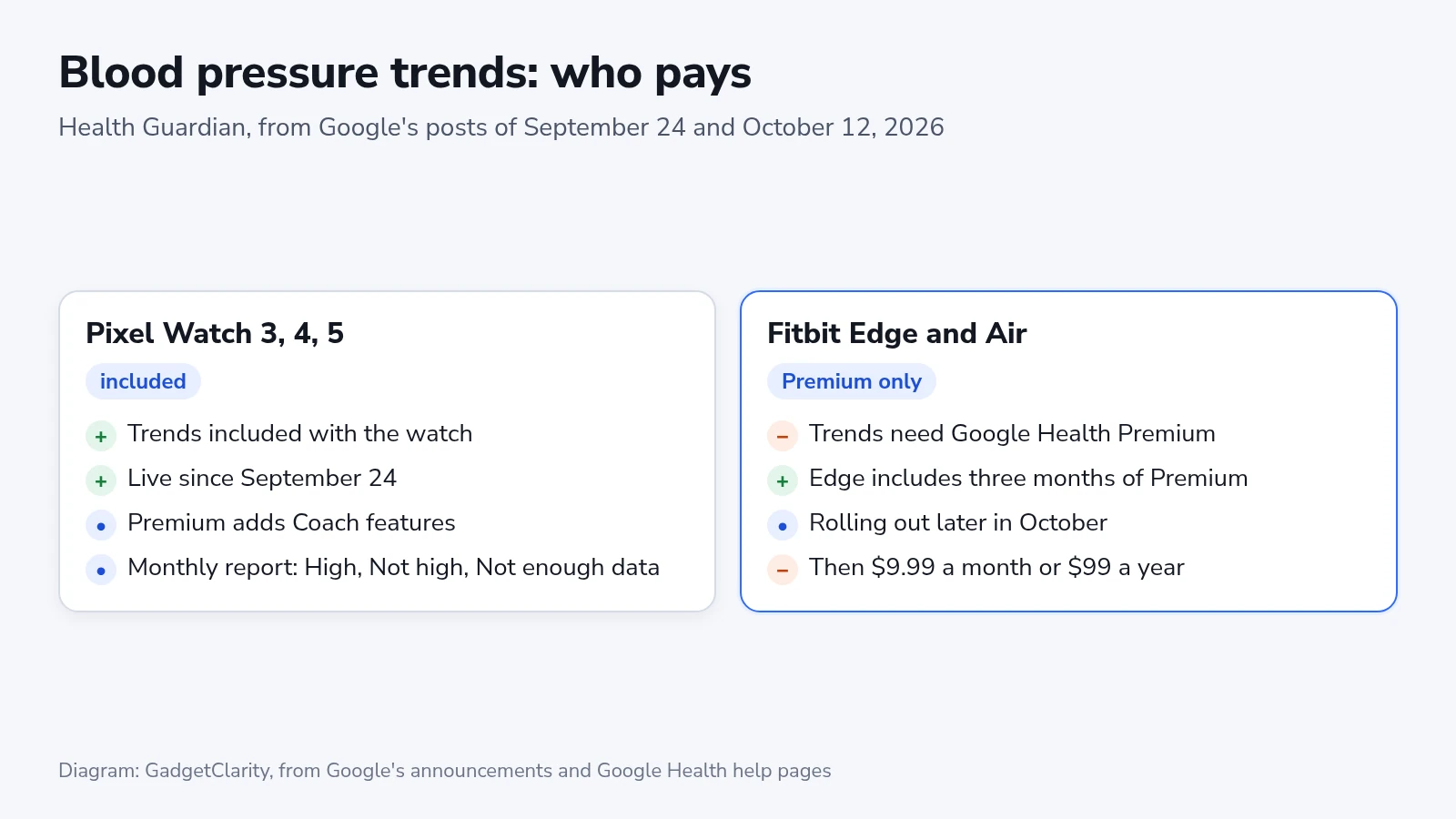
The Fitbit Edge reaches stores on October 27 at $179.99, and Google’s launch post lists blood pressure trends among its health features. Google’s help page for blood pressure trends, read on October 14, still says Fitbit devices are not supported. A second Google post from launch day, October 12, settles it: the trends reach the Edge and the Fitbit Air later this month, for Google Health Premium subscribers only. Pixel Watch 3, 4 and 5 owners get the same monthly report without paying.
Premium on the Edge and the Air
Health Guardian is Google’s name for its background health checks, and the October 12 post says those features are “rolling out to Fitbit Air and Fitbit Edge for users with a Google Health Premium subscription later this month.” The two it names are blood pressure trends and insulin resistance trends. The Edge’s own setup page says the same thing in general terms, that you need Premium “to use advanced health tracking features.”
Premium costs $9.99 a month or $99 a year, and every Edge comes with three months of it. Google’s terms say the plan renews at the monthly rate after a trial unless you cancel.
Google said on September 24 that the Health Guardian tools are “included free with Pixel Watch 3, 4, and 5 devices,” and on those watches Premium adds Coach features around the report: a personal plan, monthly insights and a summary to take to a doctor. On the Edge the trend itself is the paid part.
Google’s help pages still say Pixel Watch only
The blood pressure trends page lists one device family, “Pixel Watch 3 and higher,” and adds that “Fitbit and third-party wearable devices are not supported at this time.” The Health Guardian overview names the Pixel Watch 3, 4 and 5 and nothing else. Both pages match the September 24 launch, when the features went to watches only, and neither has caught up with the October 12 announcements.
The Edge setup page already lists blood pressure trends and insulin resistance trends next to the ECG app and nightly blood oxygen. Until the overview pages change, the October posts are Google’s current word, and an Edge that shows no blood pressure setup on day one fits a rollout Google has only dated to “later this month.”
What three free months cover
Reports arrive at the start of each month for anyone who met the wear requirement in the month before. For blood pressure, Google’s September post asks for at least five consecutive days in a week, and the help page adds at least eight hours a day with a good signal, sleep included.
Take an Edge set up on October 27 with the feature already live. Five days to October 31 are enough for a first blood pressure report on November 1. Insulin resistance needs seven days in a month, so if Google counts the calendar month, its first report comes on December 1. Three free months from late October end in late January, which covers at most the November, December and January blood pressure reports. The February report is the first one you pay for.
Google has not said whether the trial clock starts at purchase or at setup, or on which day in October the rollout reaches the Edge, and either could move those dates.
The Edge is rated at up to seven days per charge with default settings, and 9to5Google reports about two days with the always-on display. The eight-hour rule leaves room to charge every day, and Google says five minutes on a 30 W adapter, sold separately, gives a full day.
High, Not high or Not enough data
On the Pixel Watch, Google’s blood pressure trends sort each month into High, Not high or Not enough data, with no blood pressure reading in mmHg. Google has published no separate description for the tracker version. Its footnotes cover both: the trends are general wellness information, not a hypertension screen, not a guide for changing medication and not meant for anyone who is pregnant. A High month is a prompt to measure with a cuff.
Paying after the trial
The annual plan works out to $8.25 a month, against $119.88 a year paid monthly, so anyone keeping the trends saves by switching before the trial renews. If blood pressure trends are the reason you are buying a Google wearable, the Edge costs its list price plus the annual plan from the fourth month on, while a Pixel Watch 3 or later includes the same report with no subscription.