Ultrahuman ring owners in the United States can now pull their medical records into the Ultrahuman app. The feature is called the HealthEx PowerPlug, it costs $4.99 a month or $45.99 a year, and Ultrahuman announced it on 17 September 2026 with a rollout starting that day. Once connected, the app places diagnoses, medications and procedures from your records on the same timeline as the ring’s overnight readings. For a ring that Ultrahuman sells without a required membership, this is a paid extra, and it involves sharing records that most people guard closely.
What Ultrahuman released on 17 September
HealthEx is a separate US company that helps people collect and share their own health records. Ultrahuman’s release says the PowerPlug “is rolling out from today in the United States for Ultrahuman Ring users in the Ultrahuman app”, while another line in the same release says “rolling out this week”. Read together, that is a staged rollout, so the PowerPlug may not show up for everyone on the same day.
PowerPlugs are Ultrahuman’s add-on features, found in their own tab in the app. This one is billed separately, at $4.99 a month or $45.99 a year. The annual price works out to about $3.83 a month, so paying yearly saves roughly $14 over twelve months of monthly billing.
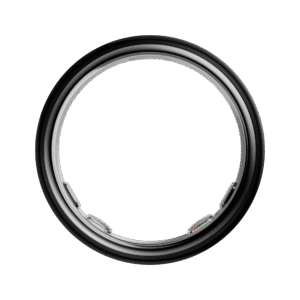
The release names two rings: the Ring AIR, which it notes is “not available in the U.S.”, and the Ring PRO. For a buyer in the United States, that makes the Ring PRO the model this feature is aimed at. Ultrahuman does not say whether a Ring AIR bought in the US before it left the market can use it.
How the records reach the app
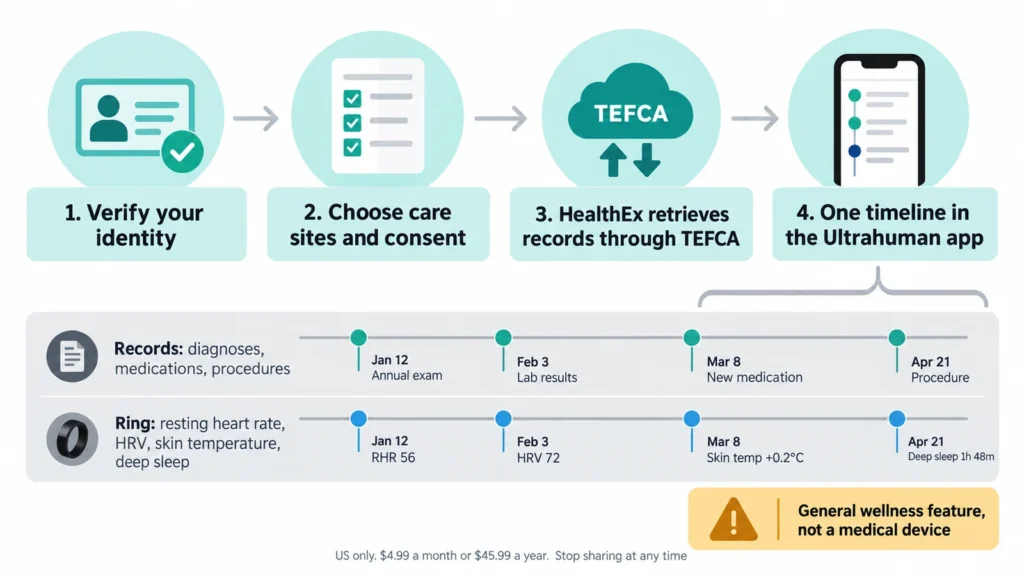
After you verify your identity, HealthEx looks for your records “across the places they have received care, reaching records nationwide through the Trusted Exchange Framework and Common Agreement (TEFCA).” TEFCA is the US federal framework that connects health information networks so that records can move between providers that use different systems.
In practice, that means you do not need a separate portal login for every clinic you have visited. The release says HealthEx maps “532 conditions, medications, and procedures” from electronic medical records. It does not list which health systems respond through TEFCA, so how complete your own record looks will depend on where you have been treated.
The consent model is set out in one sentence. Members “choose which care sites to access records from, actively consent to sharing their records, and can stop sharing those records at any time.”
What you see once it is connected
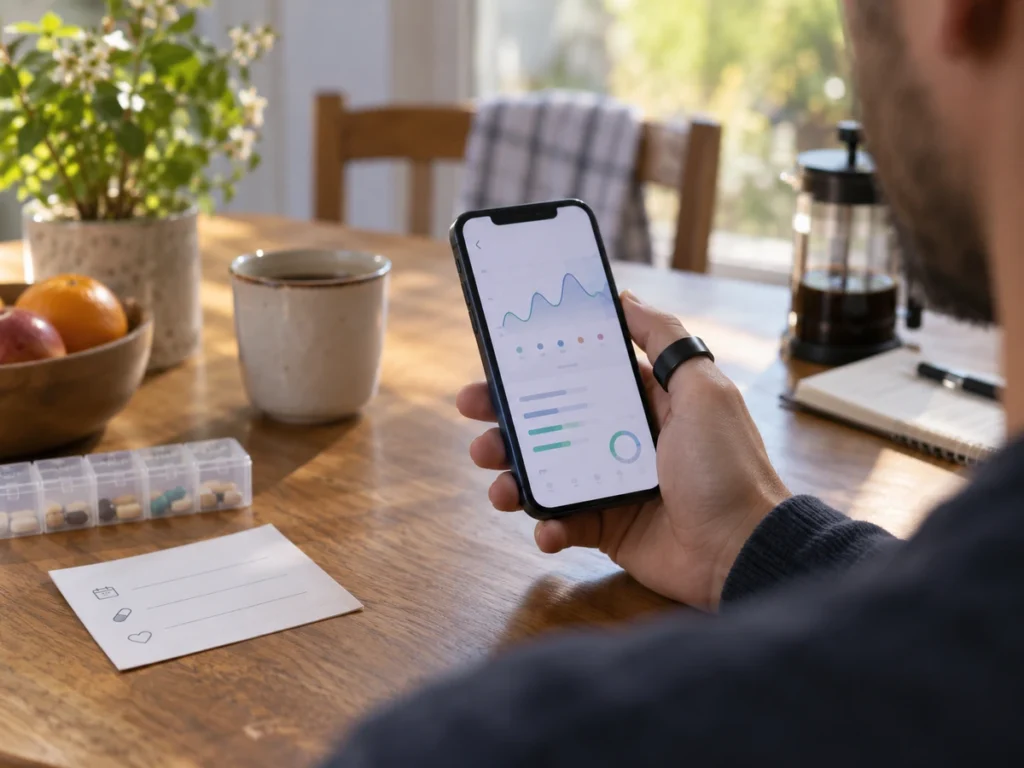
The app shows four ring measurements, resting heart rate, heart rate variability, skin temperature and deep sleep, “on the same timeline as the medications, procedures, and diagnoses in medical records.” The idea is that you can see how your overnight numbers moved after starting a medication or after a procedure, with dates taken from the record rather than from memory.
HealthEx’s chief executive, Priyanka Agarwal, put it this way in the release: “A medical record captures what happened at the visit, and Ultrahuman shows how the body responds every day after it.” Ultrahuman’s chief executive, Mohit Kumar, said the feature “puts crucial health records in one place and adds context to Ring measurements.”
The release is equally clear about the limits. The PowerPlug “is a general wellness feature. It is not a medical device, does not diagnose, treat, cure, or prevent any disease or condition, and is not a substitute for professional medical care.” A lower heart rate variability after starting a new drug is something to mention to the doctor who prescribed it. The app does not tell you what caused it.
Privacy, and what the release does not cover
Both companies make one commitment in writing: “Neither Ultrahuman nor HealthEx sells member health data, uses it for advertising, or uses it to train AI models.”
Several questions a careful buyer would ask are not answered in the announcement. It does not say where the imported records are stored or for how long. Nor does it say whether stopping sharing deletes records already pulled into the app, or only stops new ones. HIPAA, the US health privacy law, goes unmentioned, and so does which company is responsible for the records under it. Consumer wellness apps are often outside HIPAA, so the written privacy policy is the document that sets your protections here, and it is worth reading before you connect anything.
Is it worth $45.99 a year?
iPhone owners in the US already have a free way to download records from participating providers into Apple’s Health app, which has offered Health Records since 2018. What the PowerPlug adds is the pairing with the ring’s data on one timeline, and a search across TEFCA rather than a provider-by-provider connection.
That pairing is most useful if something has changed in your care. Someone starting a blood pressure medication, recovering from surgery, or managing a long-term condition with regular appointments has a reason to look at ring trends against dated events. For someone with no recent diagnoses or prescriptions, the timeline will be mostly empty and the ring data looks the same as it did before.
If you want to try it, the monthly price lets you test it for $4.99 before committing to a year. Connect only the care sites you are comfortable sharing, and read Ultrahuman’s and HealthEx’s privacy terms first. A published list of participating health systems, or a clear statement on deletion, would make this easier to recommend without reservations.