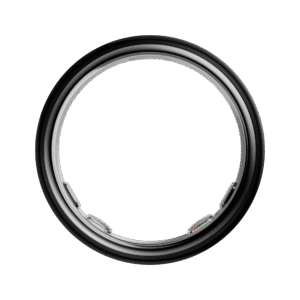
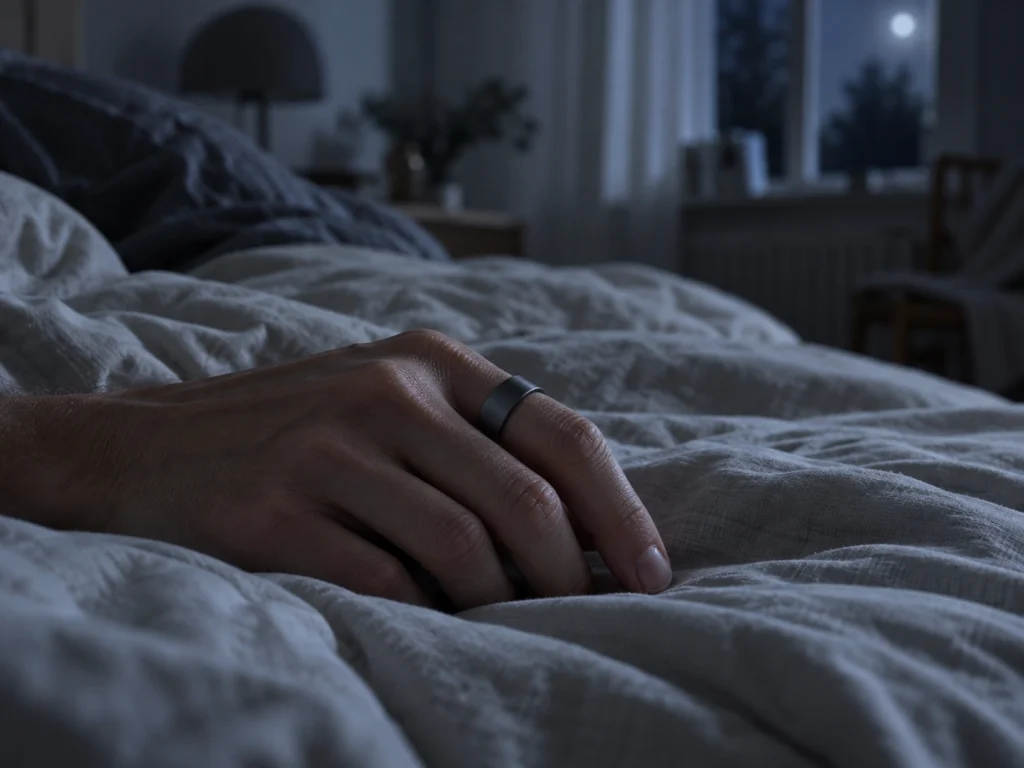
A new study of 1,290 Oura Ring wearers found about ten minutes less deep sleep a night in people with moderate-to-severe anxiety symptoms. The paper, published in BMC Medicine on September 29, drew on the Northern Finland Birth Cohort, adults aged 33 to 35 who wore a second-generation Oura Ring for up to two weeks. Groups with more symptoms also had less REM sleep, a slightly higher heart rate at night, lower heart rate variability and less daytime movement. The authors call the effect sizes small. What the differences mean for one person “remains uncertain,” they write, so your own ring cannot tell you whether you are anxious or depressed.
What the researchers measured
Every participant answered the GAD-7, which scores anxiety from 0 to 21 and sorted people into no, mild, and moderate-to-severe anxiety groups. They also answered the 25-item Hopkins Symptom Checklist, which covers both depression and anxiety, and on which a mean score of 1.75 or more counted as having symptoms.
Of the 1,290, 120 landed in the moderate-to-severe anxiety group, 423 in mild and 747 in none. On the Hopkins checklist, 176 had depression and anxiety symptoms and 1,114 did not.
The rings recorded sleep stages, heart rate and heart rate variability at night, and movement around the clock. Participants got no chargers, so nobody reset a ring by accident, and they saw none of their own data. On average each person gave about six valid days. To compare like with like, the team cut every night to a fixed six-hour sleep window, so the sleep minutes below are minutes within those six hours.
How big the differences were
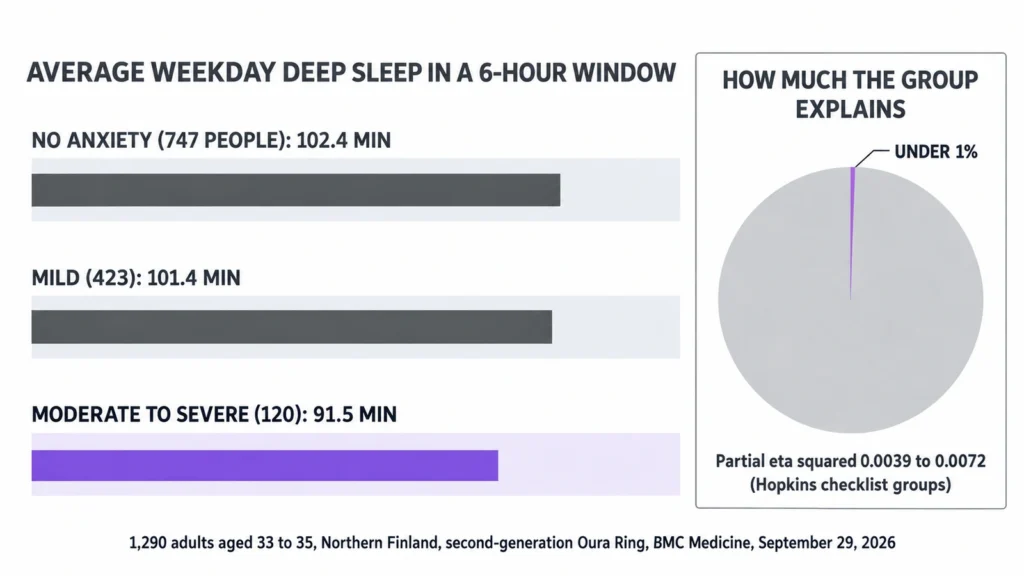
On weekdays, the moderate-to-severe anxiety group averaged 91.5 minutes of deep sleep against 101.4 and 102.4 minutes for the mild and no-anxiety groups. It had about 9 minutes less REM sleep and about 15 minutes more light sleep. Weekends looked much the same.
The Hopkins groups showed a smaller version of the pattern. People with symptoms averaged 95.6 minutes of deep sleep on weekdays against 103.0 for those without, and a weekday heart rate at night of 58.2 against 56.8 beats per minute.
The paper reports those differences as statistically significant, and then gives the number that puts them in proportion. For the Hopkins groups, the partial eta squared values run from 0.0039 to 0.0072. Put plainly, which group a person was in accounts for well under 1 percent of the spread in these sleep, heart rate and movement figures once the other factors were adjusted for. That is why the authors call the effect sizes small and say the differences may not mean much for any one person.
Why it does not carry over to your ring
The study used the second-generation Oura Ring, and Oura’s current Oura Ring 5 is several hardware and software generations later, so the minute figures will not map one to one onto what your app shows. The authors list the proprietary algorithm as a limitation of its own, since nobody outside Oura can see how a stage gets labeled light or REM, and they note that rings like Oura’s separate light and REM sleep less reliably than a sleep lab does.
Symptoms and ring data were gathered at the same time, so the paper cannot say whether poor sleep feeds anxiety or anxiety disturbs sleep. The sample is also narrow by design: one age group, one region of northern Finland, 62.7 percent women, most of them employed and holding a polytechnic or university degree.
Funding came from the Research Council of Finland, the University of Oulu and an EU Marie Skłodowska-Curie grant, and the authors declare no competing interests.
What the authors think it could become
The conclusion is more hopeful than the effect sizes. The authors say their results support using consumer wearables “as tools for screening and detecting depression and anxiety in daily life settings,” alongside clinical methods, and they call the study exploratory and ask for longitudinal research that follows the same people over time.
Nothing in the paper is a product feature, and Oura has announced no anxiety or depression screening based on it.
Use the questionnaire as well as the ring
The GAD-7 is seven questions, each scored from 0 to 3, and in this study it was the questionnaire, not the ring, that decided who counted as anxious. If your answers or your mood worry you, take them to a doctor, and bring the ring’s sleep trend along as context.