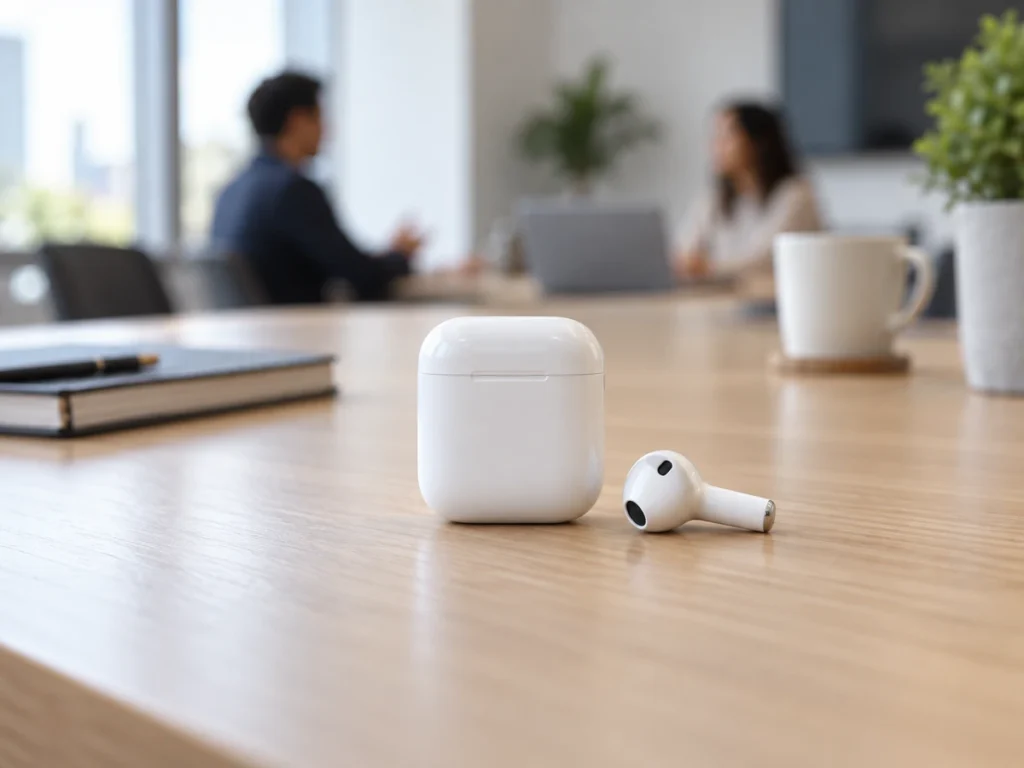
You finish a client call and the useful part of it starts decaying straight away. The decision stays with you but not the number. Or the number stays, and who agreed to own it is gone. Plaud builds devices for exactly that gap, and on 9 September 2026 it announced a new one. Plaud One is a pair of earbuds plus a charging case that records the conversation and then acts on it. It costs $249.99, Plaud is making 2,000 of them, and the software that carries the whole pitch does not arrive until October.
Two dates, and what happened on each
On 9 September 2026 Plaud published the Plaud One announcement and called the first run a Limited Explorer Edition. A week later, on 16 September 2026, it published a second post describing the next generation of Plaud Intelligence and ended it with a single line about timing: “Experience it for yourself this October.”
That gap matters more than it looks. The hardware is a recorder with good microphones. The thing being sold is an agent that turns a recording into finished work, and that agent ships later.
Availability is narrow by design. Plaud’s own footnote reads: “Limited to 2,000 units worldwide and available only in the United States, France, Germany, the United Kingdom, Italy, Spain, Canada, and the Netherlands, while supplies last.” As of 20 September 2026 the product page shows a waitlist button and no buy button.
The hardware is two recording systems, not one
Most AI recorders give you one microphone array and one use case. Plaud One splits the job between the earbuds and the case, and the split is the interesting part.
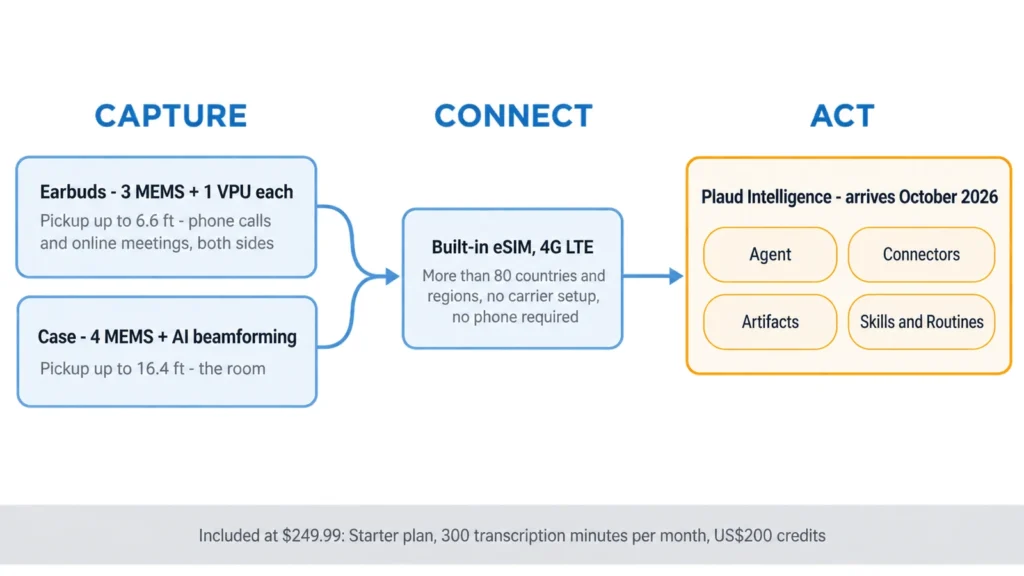
Each earbud carries three MEMS microphones and one VPU microphone, with pickup quoted up to 6.6 ft. The VPU is what lets the earbuds capture both sides of a phone call or an online meeting, the other person’s half as well as yours. The case carries four MEMS microphones with AI beamforming and reaches up to 16.4 ft, which is the in-person meeting case: put it on the table and it takes the room.
The weights are small. Each earbud is 0.16 oz, the case is 2.20 oz, and the fit is half-in-ear in white. Plaud also treats these as ordinary earbuds, with active noise cancellation, environmental noise cancellation for calls, a 12 mm dynamic driver and LDAC for Hi-Res audio. You can use the earbuds without the case for calls, meetings, music and agent activation. The case adds in-person capture, LTE, speaker output and charging.
The eSIM changes what the device is
Plaud One has a built-in eSIM with 4G LTE coverage that Plaud describes as “more than 80 countries and regions, with no carrier setup required.” So the case does not wait for your phone or for Wi-Fi. Recordings sync on their own, and you can press the Agent Button on the case, speak a request, and hear the answer through the case speaker.
The eSIM matters because a recorder that depends on a paired phone fails in the exact moments you most want it: bad signal in a meeting room, a phone that locked itself, a battery that died at lunch.
One caution. Plaud’s product page lists the question “Where is 4G LTE available, and is there an extra cost?” in its own FAQ, and the page does not spell out the terms next to the price. Whether connectivity stays free after year one is the kind of thing that quietly becomes a subscription. Plaud’s page does not say. Ask Plaud support for the answer in writing before you put money down.
Inside the $249.99 bundle
The Explorer Edition bundle is the device, the Plaud Intelligence Starter plan and US$200 in Plaud credits. Plaud’s footnote adds that credits are “valued at US$200 or local equivalent” and that “credit value, availability, and usage may vary by region, currency, and Plaud Intelligence plan.”
Starter is the free tier. It gives you 300 transcription minutes a month, which translated into a working week is five hours. One hour-long meeting a week uses most of it. Anyone recording daily standups and client calls will burn through Starter inside a fortnight.
Plan prices once Starter runs out
Plaud’s published plan prices, billed annually, are $8.33 a month for Pro with 1,200 transcription minutes, and $19.99 a month for Unlimited with up to 24 hours a day. Team is $20 per member per month for the first year and $25 after that, and Plaud states that launch offer ends 30 November 2026.
Run the arithmetic before you get attached to the idea. Pro works out at $99.96 a year and Unlimited at $239.88 a year. Buy the device and pay for Unlimited and your first twelve months cost $489.87 before the $200 credit is applied. That is not a cheap pair of earbuds. It is a subscription with earbuds attached, and the honest way to judge it is against what you currently pay for meeting notes.
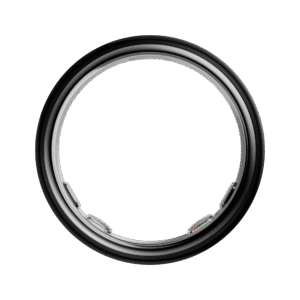
The pattern is familiar from other wearables. The same hardware-plus-membership structure runs through smart rings, where the Oura Ring 5 and its membership decide which of the features you bought the ring for stay switched on.
What the October update is supposed to do
Plaud Intelligence is getting Plaud Agent, and Plaud describes the goal in one line: “Give it a task and it sees it through.” Around it sit four pieces. Connectors link Google Calendar, Slack, Notion, Linear and Zapier, with Salesforce for Plaud Team customers. Artifacts produce finished documents in PDF, PPTX, DOCX or Markdown. Skills are saved custom instructions. Routines run a task automatically when a condition is met.
Existing data carries over. Plaud’s FAQ states that updating the app “does not remove or change any of your existing recordings, transcripts, or summaries” and that accounts and plans carry over without a reset.
Privacy, and the sentence worth reading twice
Plaud’s disclaimer says: “Conversation data is not used to train models unless the user explicitly opts in. Data is encrypted in transit and at rest.” The company lists GDPR, HIPAA, SOC 2 Type II, ISO 27001, ISO 27701 and EN 18031 compliance.
None of that settles the harder question, which is the other people in the room. Plaud puts its own reminder at the bottom of every page: “Before you record, take a moment to let others know and get their okay.” Recording law varies by country and, in the United States, by state. A device with a five-metre pickup range makes that your problem, not the manufacturer’s.
What is still unknown
Plaud’s FAQ lists three questions it does not answer beside the price: when the Explorer Edition ships, where LTE works and whether it costs extra, and what happens when the $200 of credits runs out. Battery life is not stated in the announcement either. Two more disclaimers deserve attention. “Hey Plaud” voice activation “requires Plaud Intelligence beta access,” and “certain features will be enabled through a future firmware update.”
So you are buying a device whose headline capability is in beta, arrives later, and may vary by country.
Who should join the waitlist
If you already pay for meeting transcription and your week is a chain of conversations, the Explorer Edition is a reasonable bet. The $200 credit covers a real chunk of year one, the return window is 30 days, and the hardware stands up as earbuds even if the agent disappoints.
Occasional recorders should wait. The same Plaud Intelligence update lands on the cheaper Note Pro, NotePin S and NotePin, and by November you will know whether Agent does what the announcement says. What would change that advice is a firm ship date and a plain answer on LTE cost. Until both exist, waiting costs you nothing.